
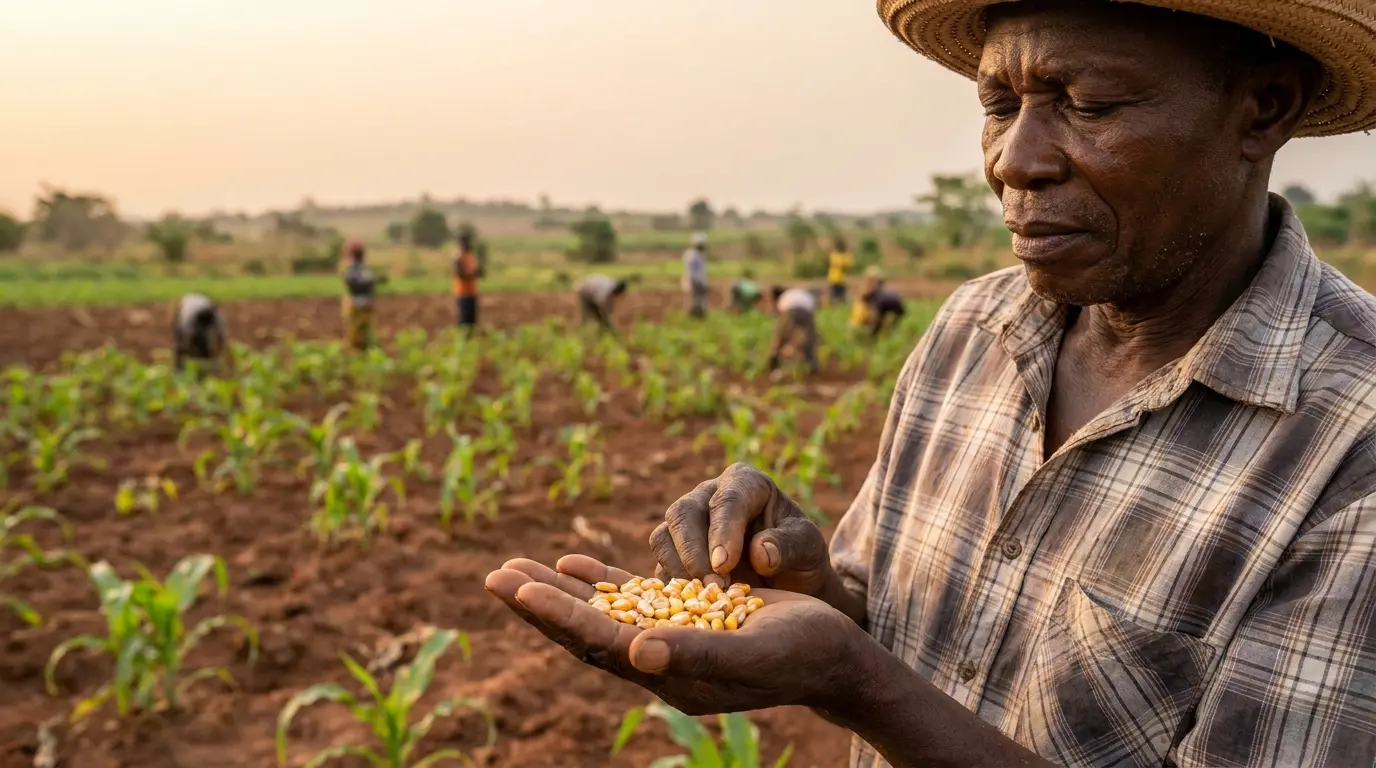
Choosing the right seeds is one of the most important decisions you will make before starting a farming season.
The quality of seeds you plant can influence crop establishment, growth, maturity, resistance to certain diseases, and ultimately your farming results.
However, not every seed variety is suitable for every farm. Farmers must consider their location, soil conditions, rainfall, production goals, and available resources before making a purchase.
In this guide, we explain how to choose the right seeds for your farm in Nigeria.
1. Understand Your Farming Goals
Before purchasing seeds, determine what you want to achieve from your farm.
Are you farming for commercial production, household consumption, or both?
Are you targeting fresh markets, processing businesses, livestock feed producers, or other buyers?
Your farming goals can influence the crop and variety you should select.
For example, a maize farmer producing for commercial grain markets may have different priorities from a farmer growing sweet corn for fresh consumption.
2. Choose Seeds Suitable for Your Location
Nigeria has different agroecological zones, with variations in rainfall, temperature, soil conditions, and growing seasons.
A seed variety that performs well in one location may not perform equally well in another.
When selecting seeds, consider:
- Rainfall pattern in your area.
- Length of the growing season.
- Soil characteristics.
- Temperature conditions.
- Local pest and disease pressure.
- Availability of irrigation.
Ask an agricultural extension professional or a knowledgeable seed supplier about varieties recommended for your location.
3. Consider the Maturity Period
Different crop varieties mature at different times.
Early-maturing varieties may be useful where the growing season is short or where farmers want to plan around specific market opportunities.
Longer-duration varieties may suit other production systems, provided the farm can support their growing requirements.
Understanding maturity helps you plan planting, harvesting, labour, and market activities.
4. Buy Quality Seeds from Reliable Sources
Seed quality is extremely important.
Poor-quality seeds can result in weak germination, uneven crop establishment, and wasted farm resources.
When buying seeds, consider the following:
- Buy from reliable suppliers.
- Check the packaging and product information.
- Confirm the crop variety and intended use.
- Check the seed lot and expiry information where applicable.
- Inspect the packaging for damage.
- Look for appropriate certification or quality assurance information.
- Follow the manufacturer’s storage and planting instructions.
In Nigeria, the National Agricultural Seeds Council oversees seed quality and certification.
Quality seeds are an important foundation for crop production, but they do not guarantee a successful harvest without proper farm management.
5. Check Disease Resistance and Other Important Traits
Some seed varieties are developed with resistance or tolerance to particular diseases, pests, or environmental conditions.
Depending on your crop and location, useful characteristics may include:
- Disease resistance.
- Drought tolerance.
- Suitable maturity period.
- Good market characteristics.
- Adaptability to local conditions.
- Appropriate grain, fruit, or vegetable quality.
Always check the specific characteristics of the variety rather than assuming all improved seeds have the same benefits.
6. Consider Your Market Before Planting
A profitable farm begins with understanding what buyers want.
Before purchasing seeds, consider:
- Which crops are in demand in your target market?
- What varieties do buyers prefer?
- What size, colour, or quality characteristics are required?
- When is demand usually highest?
- Can you harvest and transport the produce at the right time?
Market research can help you avoid producing crops that are difficult to sell.
7. Calculate Your Seed Requirements
Buying too little seed can delay planting, while buying too much may result in unnecessary expenses or poor storage.
Calculate your planting area and determine the recommended seed rate for the crop and variety.
For example, maize, okra, tomato, pepper, and cucumber all have different seed requirements.
Follow the recommended planting spacing and seed rate rather than guessing.
8. Store Seeds Properly Before Planting
Even quality seeds can lose viability when stored under unsuitable conditions.
Keep seeds:
- In their appropriate packaging.
- Away from excessive heat.
- Protected from moisture.
- Away from direct sunlight.
- In a clean storage area.
- Away from pests and rodents.
Follow the manufacturer’s instructions, particularly for treated seeds.
Do not use seeds that show signs of damage, contamination, or improper storage without first checking their suitability.
Common Mistakes to Avoid When Buying Seeds
- Selecting seeds only because they are cheap.
- Buying varieties without checking their suitability for your location.
- Ignoring seed maturity information.
- Buying from unreliable sources.
- Planting without considering market demand.
- Failing to plan seed quantity.
- Ignoring storage conditions.
Frequently Asked Questions
Which seeds are best for farming in Nigeria?
The best seeds depend on the crop, location, rainfall, soil conditions, market requirements, and farming objectives.
Are improved seeds better than local seeds?
Improved varieties may offer advantages such as specific maturity characteristics, productivity potential, or disease resistance. However, performance depends on suitability and proper management. Some local varieties may also be appropriate for particular farming systems or markets.
How do I know if seeds are genuine?
Purchase from reliable suppliers and check packaging, product information, and certification or quality assurance details where applicable.
Can quality seeds guarantee high yields?
No. Quality seeds provide a strong foundation, but successful production also depends on soil fertility, water, pest management, weed control, and other farming practices.
Find the Right Seeds for Your Farming Needs
Planning your next planting season?
Growmore-Africa helps farmers access agricultural inputs, including seeds, fertilizers, crop protection products, and other farm supplies.
Choosing suitable seeds is an important first step toward better farm planning.
Contact Growmore-Africa to discuss the seeds and agricultural inputs you need for your farm.