
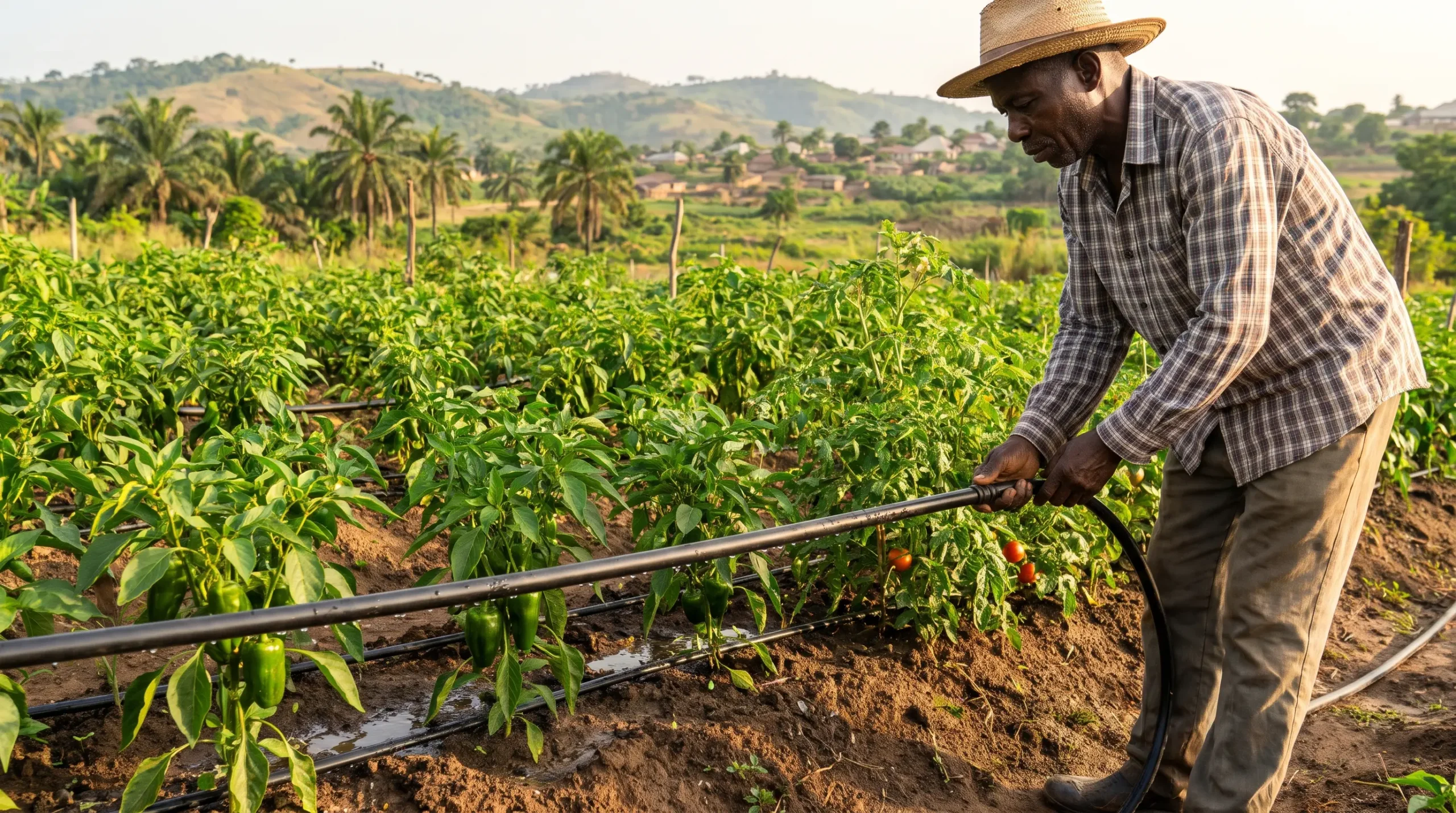
Water is one of the most important resources in agriculture. Without adequate water, crops may struggle to germinate, grow, flower, and produce healthy harvests.
In Nigeria, many farmers depend heavily on rainfall for crop production. While rain-fed farming remains important, unpredictable rainfall and seasonal changes can create challenges for farmers.
Irrigation provides an opportunity to manage water more deliberately and support crop production when rainfall is insufficient.
In this article, we explain why irrigation matters, the different irrigation systems available, and how farmers can determine whether irrigation is suitable for their farms.
What Is Irrigation?
Irrigation is the artificial application of water to agricultural land to support crop growth.
It allows farmers to supply water to crops when natural rainfall is insufficient or unavailable.
Depending on the farm, irrigation may involve pumps, pipes, sprinklers, drip systems, canals, or other water delivery methods.
1. Irrigation Can Reduce Dependence on Rainfall
Rain-fed farmers depend on rainfall to provide water for their crops.
When rainfall starts late, stops unexpectedly, or becomes insufficient during critical growth stages, crops may experience water stress.
Irrigation can help farmers manage some of these challenges by providing supplementary water when needed.
However, irrigation does not eliminate weather risks or guarantee a successful harvest.
2. Irrigation Can Support Dry-Season Farming
Dry-season farming can create opportunities for farmers who have access to suitable water sources.
Depending on the crop and location, irrigation may allow production beyond the main rainy season.
Vegetables such as tomato, pepper, cucumber, and leafy vegetables are among the crops farmers may consider for irrigated production.
Before starting dry-season farming, assess water availability, production costs, market demand, and crop suitability.
3. Irrigation Helps Farmers Manage Water More Deliberately
Different crops require different amounts of water at different stages of growth.
Too little water can affect crop development, while excessive water may cause root problems, nutrient losses, or waterlogging.
An appropriate irrigation system can help farmers control the timing and distribution of water.
The objective is not simply to apply more water but to provide the right amount at the right time.
4. Irrigation Can Improve Crop Management
Access to irrigation may make it easier to plan planting and manage crop production.
For example, farmers with reliable water supplies can make more informed decisions about:
- Planting schedules.
- Water management.
- Crop selection.
- Production timing.
- Labour planning.
These advantages depend on the availability of suitable infrastructure and effective farm management.
5. Irrigation Can Support Commercial Vegetable Production
Vegetable farming often requires careful water management.
Crops such as tomato, cucumber, pepper, and other vegetables can be sensitive to water shortages during important growth stages.
An appropriate irrigation system can help farmers manage water availability more effectively.
However, water requirements vary by crop, soil, climate, and growth stage.
Common Types of Irrigation Systems
Drip Irrigation
Drip irrigation delivers water through pipes and emitters near the crop root zone.
Potential benefits:
- Targeted water application.
- Reduced water loss through some forms of evaporation.
- Convenient irrigation for many vegetable crops.
- Compatibility with certain fertigation systems.
Drip irrigation requires appropriate design, filtration, maintenance, and installation.
Sprinkler Irrigation
Sprinkler systems distribute water through pipes and sprinklers, applying it over the crop or soil surface.
They can be suitable for various crops and farm layouts.
Their performance depends on water pressure, system design, wind conditions, and maintenance.
Surface Irrigation
Surface irrigation involves distributing water over the soil surface through channels, furrows, or basins.
It may be suitable for certain farms depending on soil characteristics, land preparation, water availability, and topography.
How to Choose the Right Irrigation System
Before purchasing irrigation equipment, consider:
- Size of your farm.
- Type of crop you intend to grow.
- Water source and availability.
- Soil characteristics.
- Terrain and farm layout.
- Water pumping requirements.
- Installation and maintenance costs.
- Availability of spare parts.
- Your production budget.
A properly planned irrigation system should match your farm’s requirements rather than simply being the most expensive option.
Common Irrigation Mistakes Farmers Should Avoid
Choosing equipment without assessing the water source
A suitable water source is essential for successful irrigation.
Applying excessive water
Over-irrigation may damage crops and waste water.
Ignoring drainage
Poor drainage can cause waterlogging and negatively affect crop roots.
Neglecting maintenance
Pipes, filters, pumps, and emitters require regular inspection and maintenance.
Ignoring irrigation costs
Consider equipment costs, pumping expenses, energy requirements, labour, and repairs before investing.
Frequently Asked Questions
Is irrigation necessary for farming in Nigeria?
Not every farm requires irrigation. However, it can be valuable for farms facing insufficient rainfall or farmers planning dry-season production.
Which irrigation system is best for vegetable farming?
Drip irrigation and sprinkler irrigation are commonly considered for vegetable production. The appropriate system depends on the crop, farm size, water source, budget, and soil conditions.
Can irrigation increase crop yield?
Adequate water management can improve crop performance where water availability is limiting. Actual results depend on several other production factors.
Can I use irrigation during the rainy season?
Yes. Supplementary irrigation may be useful during periods of insufficient rainfall, even within the rainy season, depending on crop requirements.
Get Irrigation Materials and Agricultural Support
Planning to improve water management on your farm?
Growmore-Africa supports farmers with agricultural inputs, including irrigation materials, seeds, fertilizers, crop protection products, and other farming supplies.
Whether you are preparing for dry-season farming or improving your existing production system, selecting suitable irrigation materials is an important part of farm planning.
Contact Growmore-Africa to discuss irrigation materials and other agricultural inputs for your farm.